
Industry information, knowledge articles, FAA updates.

Cranes and the FAA: Sky is the Limit!

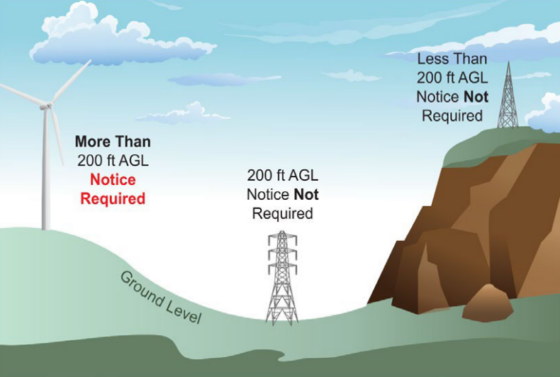
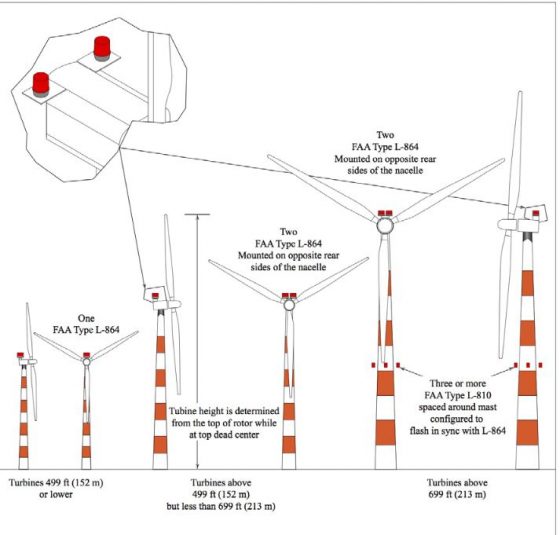
by Justin Hetland Justin Hetland is a Project Manager at Capitol Airspace Group and is a certified flight instructor. Prior to joining CAG, Justin served as an Aeronautical Information Specialist at the Federal Aviation Administration (FAA), evaluating the impacts of tall structures on the national airspace system. The FAA has long worked with crane operators to preserve the safety and efficiency of the nation’s airspace. Leading this effort is the FAA’s Obstruction Evaluation Group (OEG). The OEG studies proposed cranes and other off-airport structures that may impact airspace, air navigation, or airport capacity. Ultimately, the OEG will issue favorable determinations of no hazard (DNH) for acceptable structures. With a bit of planning and prior notice, crane operators can raise their booms confident in the safety of nearby aviation activities. When do crane operators have to notify the FAA? Crane operators and/or developers must notify the FAA of any proposed equipment greater than 200 feet above ground level (AGL). Federal regulations also require notice for shorter structures near airports or navigation facilities. The FAA’s Pre-Screening Tool is a quick, easy way to check if notice is required. Filing is required at least 45 days before the start date of construction; however, crane sponsors should file as soon as the requirement becomes apparent. If airspace mitigation is required, the aeronautical study could take many months. How do crane operators file notice of temporary equipment with the FAA? Crane sponsors may use the FAA’s Obstruction Evaluation/Airport Airspace Analysis (OE/AAA) web portal to electronically file Form 7460-1, Notice of Proposed Construction or Alteration. This notice outlines the crane’s location, site elevation, structure height, and brief description of the proposal. Once the FAA receives the 7460-1, an OEG technician will verify the filing and assign an aeronautical study number (ASN). At this point, the OEG begins the aeronautical study process. What is involved in the FAA aeronautical study for cranes? The OEG coordinates with ten federal offices across the FAA, the Department of Homeland Security (DHS), and military to assess proposed cranes. Each line of business studies the proposal for impacts within their areas of responsibility. Cranes that exceed obstruction standards established under 14 CFR Part 77 are deemed to be “obstructions” and may warrant further scrutiny and coordination. The outcome of an aeronautical study is either a favorable determination or, in some cases of adverse effect, a Notice of Preliminary Findings (NPF). Adverse effects can be mitigated through further aeronautical study, adjusting the crane height, or marking and lighting. Following further study, a DNH will be issued provided there is no substantial aeronautical impact. When does the FAA require marking and/or lighting for cranes? In general, all cranes that exceed either 200 feet AGL or 14 CFR Part 77 obstruction standards will require marking and lighting. The FAA specifies marking and lighting requirements in the determination letter. Further information about marking and lighting is available in FAA Advisory Circular (AC) 70/7460-1, Obstruction Marking and Lighting. Who needs to be notified before the crane goes up? Crane sponsors may be required to take several steps to ensure relevant parties are aware of crane activity. Generally, the nearest airport and/or air traffic control tower must be notified at the start and end of the project.  If flight procedures will be impacted, a Notice to Airmen (NOTAM) may be required to alert pilots of the crane’s location. These provisions are specific to each project and are outlined in the determination letter. For assistance with the FAA’s obstruction evaluation process, please contact us.

FAA airspace obstructions filing with FAA

How the Government Shutdown is Affecting FAA and DoD Review Processes

Based on our experience with previous shutdowns and what we’ve learned today, here’s what you can expect: Specific to the FAA Aeronautical Study Process Specific to the DoD Review Process Post-Shutdown Expectations When the government reopens, we expect a surge in project activity that will impact turnaround times for both existing and new filings. Based on experience, delays may extend to two to three times the length of the shutdown as agencies work through the backlog.

Studio-Transmitter Links (STLs)

Expert Insights: Trends in Studio-Transmitter Links (STLs)

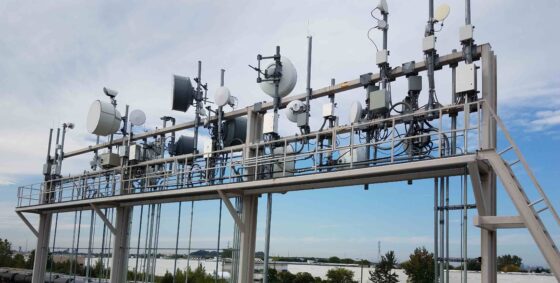
Broadcast veteran Cindy Hutter Cavell, director of the Spectrum Group at Capitol Airspace Group, recently shared her insights on evolving STL technologies. With nearly five decades in broadcasting and a NAB Television Engineering Achievement Award to her name, Cavell highlighted the growing adoption of IP-based delivery systems and transmitters with IP inputs, which offer broadcasters greater flexibility in signal transport. She explained that while higher-frequency STL links like 11 GHz offer greater data capacity, they are more vulnerable to environmental factors such as rain and require clear line-of-sight paths. In contrast, lower-frequency links like 950 MHz are more resilient and can navigate minor obstructions, though they offer less bandwidth. Cavell also emphasized the importance of choosing between licensed and unlicensed microwave options, noting that while unlicensed systems are cost-effective, they pose interference risks—especially in crowded tower environments. As cloud-based broadcasting grows, Cavell recommends backup solutions like local servers at transmitter sites to ensure continuity. For remote sites lacking traditional connectivity, she suggests exploring partnerships with WISPs or satellite internet, though the latter may be weather-sensitive. Her advice underscores the complexity of STL planning and the value of expert guidance in designing reliable, high-performance links.

FAA Updates Marking and Lighting Advisory Circular

The FAA has updated its guidelines for the proper way to light and mark obstructions affecting navigable airspace. Advisory Circular 70/7460-1M for Obstruction Lighting and Marking is effective immediately. It cancels Advisory Circular 70/7460-1L.

Solar Glint and Glare Studies file photovoltaic (PV) array with FAA

FAA Issues Policy on Solar Projects on Airports | Federal Aviation Administration

FAA Issues Joint Order 7400.2R The FAA recently published FAA Joint Order 7400.2R, which outlines updated procedures for handling airspace matters.  The Federal Aviation Administration (FAA) published a final policy aimed at ensuring that airport solar projects don’t create hazardous glare. The policy requires airports to measure the visual impact of such projects on pilots and air traffic control personnel.

Understanding the FAA Obstruction Evaluation (OE) Process

The United States Congress charged the Federal Aviation Administration (FAA) with the responsibility to encourage air commerce in the United States. As part of this responsibility, the FAA is tasked with ensuring air safety and preserving the National Airspace System (NAS). It is through these mandates that the FAA draws its authority to conduct Aeronautical Studies of planned structures.

1 2
top